
Field Note 01 | Retrospective: After the Storm
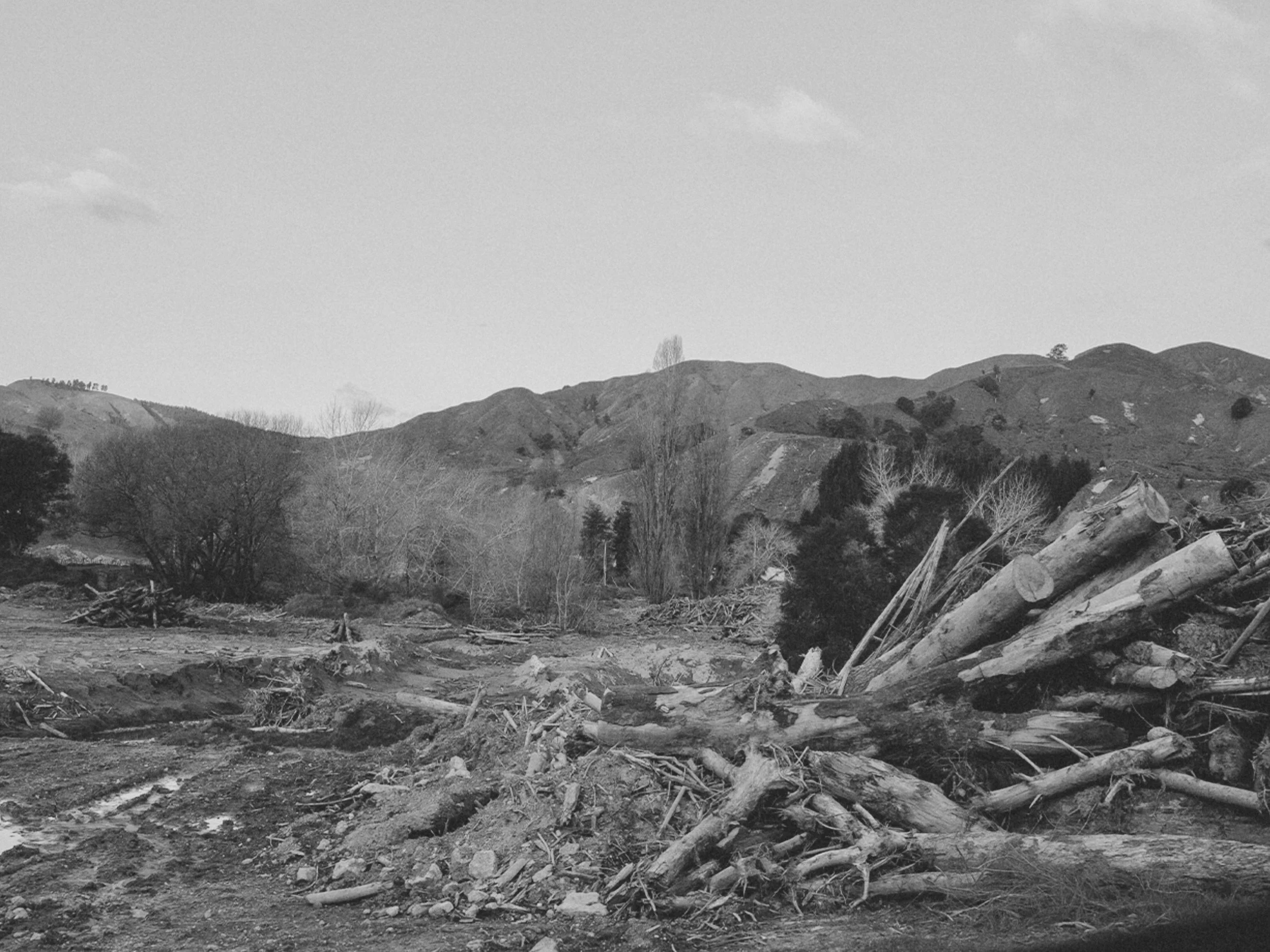
Some months after Cyclone Gabrielle ravaged the East Coast, I travelled to the farm for the first of many thesis site visits. The road into Gisborne was littered with crater-like potholes and the debris left by the high-water mark of the floods was still clinging to fence wires. We made it halfway up the Waimata Valley Road before our little hatchback was bested by the waterlogged surface, and my second cousin, the resident farmer, collected us in his truck. We drove at walking pace up a road usually tackled breakneck. It was lucky there was a road at all… during the storm, the river had swallowed parts of it whole.
On the front paddock of the farm down the road, thousands of cubic metres of forestry slash had been deposited by the Waimata River when it burst its banks. I asked whether they'd burn it to get rid of it. "No. Not allowed,” came the answer. The fury was palpable.
The slash was pine. Native forest would have held.
Having watched the news coverage of Cyclone Gabrielle from Auckland, I thought I knew what to expect around this homeland of ours. It turns out that devastation in real life looks different than on a screen, and the shock of an image is dwarfed by the horror of the real thing.
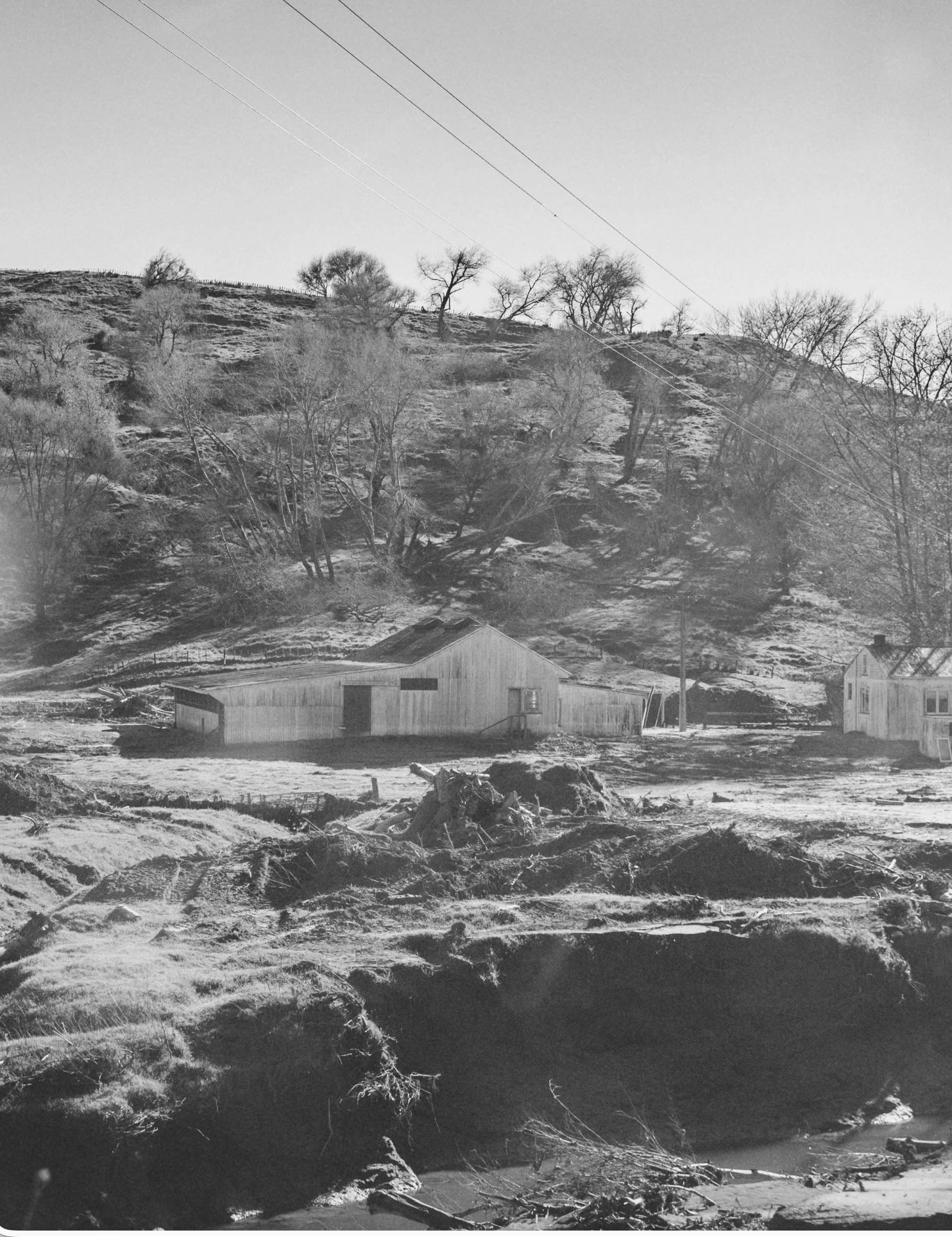
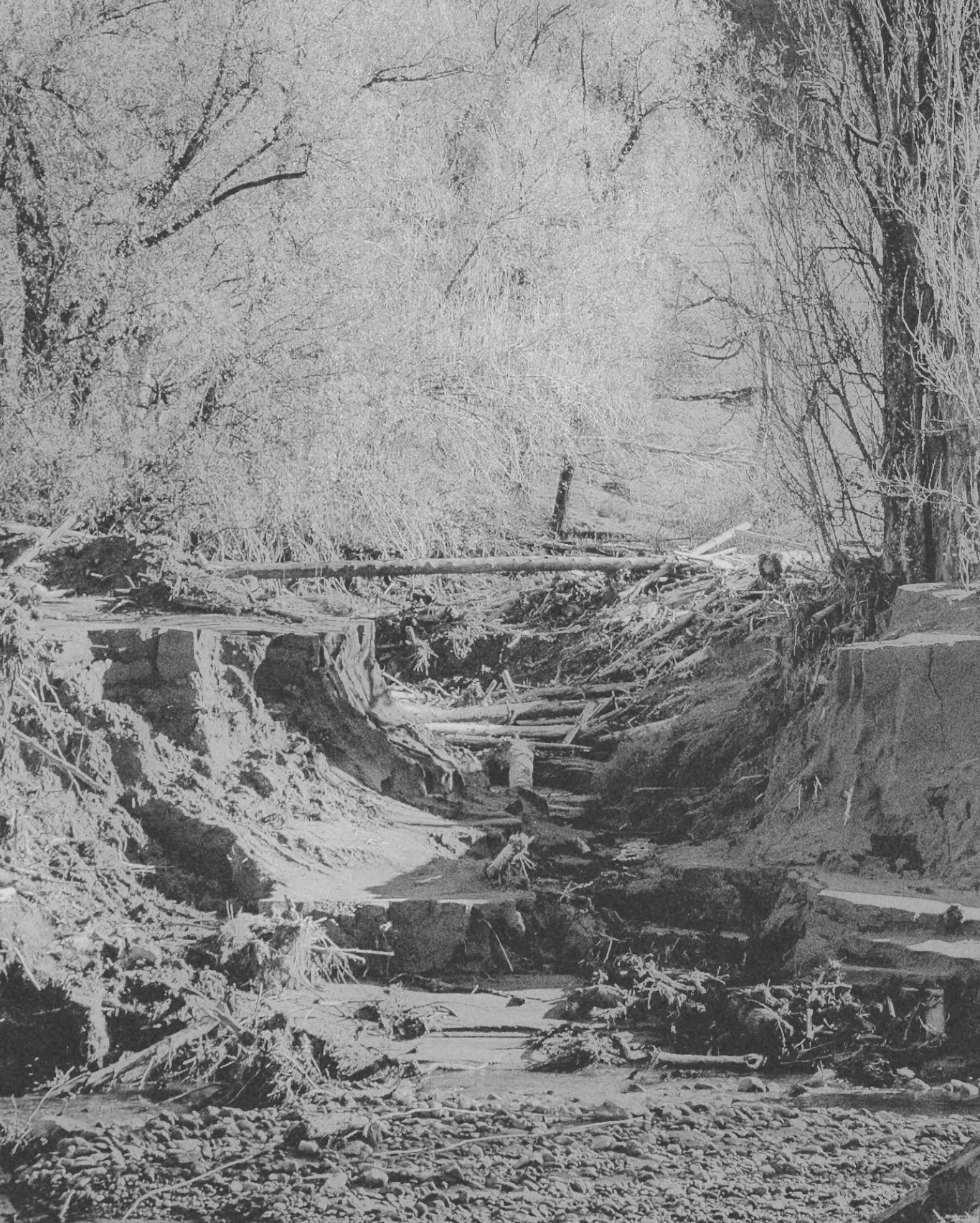
Standing in the wake of the cyclone cast aside the abstraction of words, news footage, and data. The damage was no longer measured in headlines or rainfall records, but in roads half-eaten by rivers, paddocks buried in slash, and the frustration of those left to deal with the consequences – livelihoods wrecked, property damaged, nerves frayed.
Waimata Valley, Tairāwhiti — first written June 2023.